
Red Head Harbour Planning and Breakwater
LOCATION: Morell, Prince Edward Island
CLIENT: DFO
TIMEFRAME: 2024-2025
KEY PERSONNEL: Ron Keefe, Vince Goreham, Angelo Di Quinzio
Harbour Planning
Red Head Harbour, a Department of Fisheries and Oceans (DFO) Small Craft Harbour, located in Morell, Prince Edward Island, is an essential working harbour. It supports a commercial fishing fleet and a highly active aquaculture operation.
In the fall of 2022, the harbour suffered catastrophic damage during Hurricane Fiona, losing approximately 40% of its rigid wharf structures. Many remaining sections were rendered unusable due to extensive deck loss and severe damage. In response, the Department of Fisheries and Oceans Canada engaged Harbourside to undertake a comprehensive harbour‑planning exercise aimed at restoring operational capacity while improving long‑term resilience.
The planning process focused on understanding how the harbour had been operating historically, including its heavy reliance on rigid wharves. Through extensive stakeholder engagement—including workshops with fishermen, consultations with aquaculture operators, and site visits and interviews at comparable harbours across the region—Harbourside developed a clear picture of operational needs. User habits, and existing infrastructure limitations were extensively considered. Working with a specialized coastal engineering partner, Harbourside conducted thorough layout studies that considered storm impacts, wave agitation, climate‑change projections, and long‑term adaptability.
The outcome of the planning effort demonstrated that the damaged rigid wharves did not need to be replaced in kind. Instead, strategic investments in new breakwaters and the introduction of more floating dock infrastructure, supported by updated operational practices, would provide the same level of service while greatly improving climate resilience. The approach also reduced capital expenditures for rigid structures, while minimizing future maintenance demands. This ensures the harbour can continue supporting the community’s fishing industry well into the future.
Breakwater
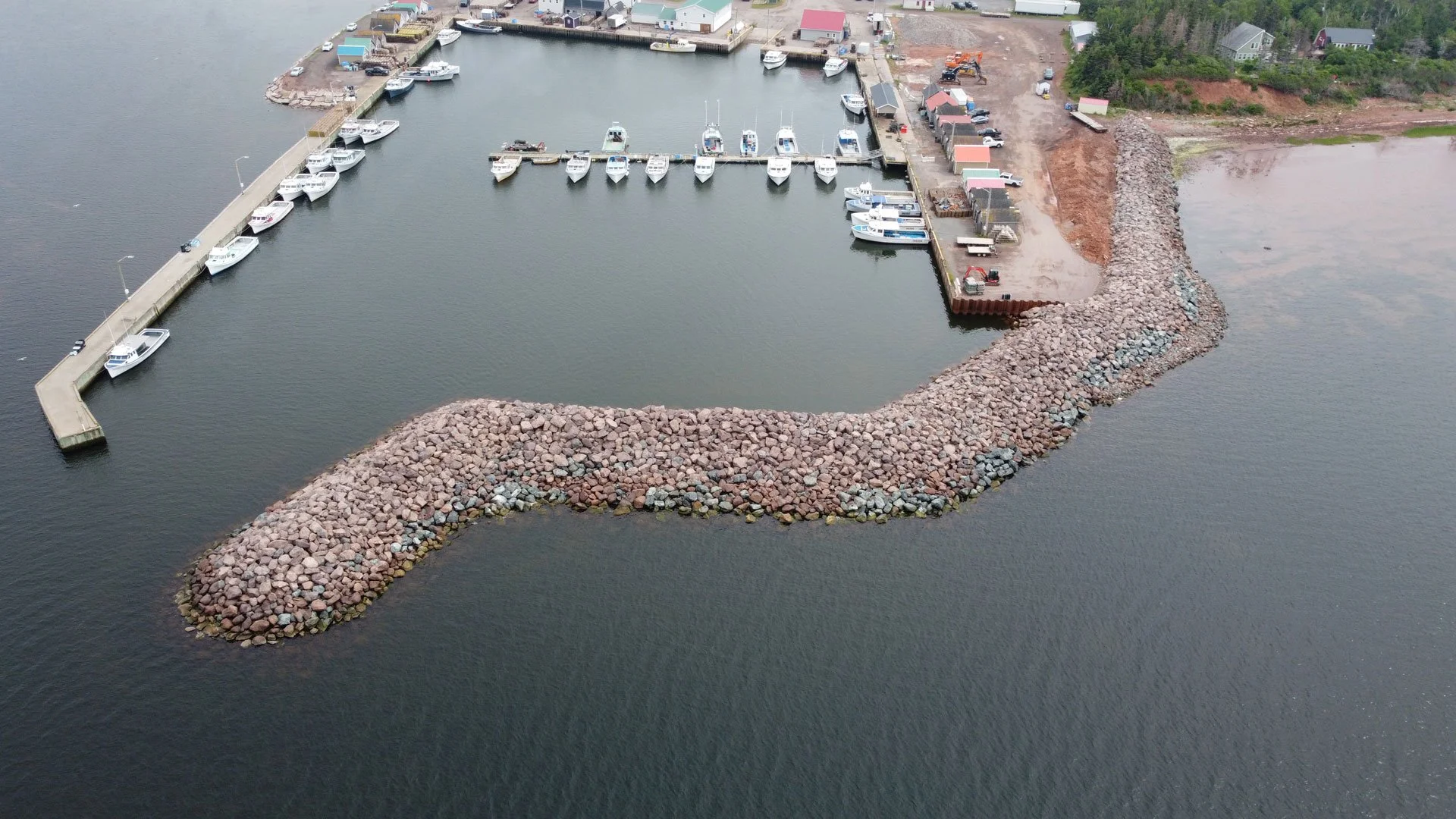
The next critical step was designing a new west‑side breakwater to provide long‑term protection from wave energy, reduce basin agitation, and ensure the harbour could remain operational during increasingly severe coastal storms. The Department of Fisheries and Oceans Canada engaged Harbourside to carry this work into detailed design, with the goal of developing a robust and climate‑resilient structure that aligned with phased future harbour improvements.
The detailed design effort included the development of a new rubble‑mound breakwater configuration, an integrated containment cell, and a cantilevered steel sheet‑piling wall, each tailored to address local wave climate, soil conditions, and operational requirements. The design also incorporated the demolition of damaged infrastructure that had lost its deck during Hurricane Fiona, removing unsafe elements and preparing the site for long‑term replacement works. Harbourside’s work formed the foundation for a safe and adaptable harbour layout capable of supporting commercial fisheries for decades to come.
Through a coordinated approach that combined coastal engineering expertise, detailed geotechnical analysis, and constructible design solutions, the project delivered a modernized protection structure essential for the continued economic and social vitality of the Red Head Harbour community.
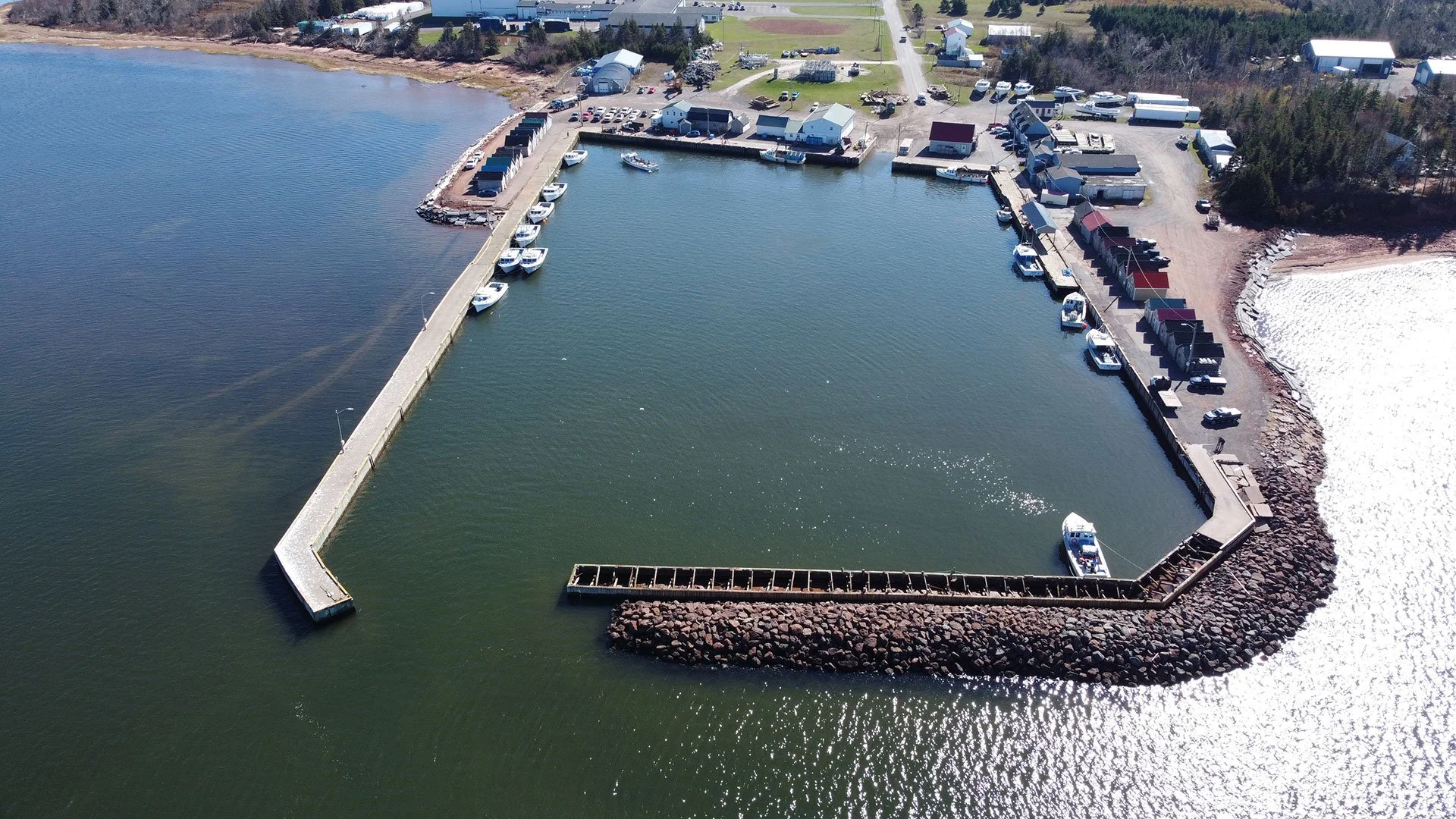
The old Red Head Harbour breakwater structure, circa 2022. Image taken after damage was sustained during Hurricane Fiona.
Unique Challenges
The planning process required navigating several complex challenges. Foremost was the harbour’s long‑standing dependence on rigid wharves, which, while operationally familiar to fishermen, posed significant cost and climate‑resilience issues. Balancing usability with future sea‑level‑rise considerations required rethinking traditional operating practices. Harbourside also had to reconcile diverse stakeholder needs—from commercial harvesters to aquaculture operators—while ensuring that any proposed layout remained functional in harsh coastal conditions. Additional challenges included integrating coastal‑engineering recommendations, addressing wave agitation within the basin (to support floating dock infrastructure), and ensuring that the new harbour configuration could be implemented in phases without disrupting essential fishing activity.
Social Impact
The Red Head Harbour plan delivers substantial long‑term benefits to the fishing community and the broader region. By shifting toward more adaptable floating infrastructure and improving harbour protection through new breakwaters, the plan enhances user safety, reduces vulnerability to major storm events, and supports uninterrupted commercial activity. The proposed configuration lowers capital and maintenance costs for DFO, allowing resources to be directed toward broader community and industry needs. Most importantly, the planning exercise empowered fishermen to help shape new operational practices, strengthening local resilience and ensuring the harbour remains a reliable economic anchor for the community.