

Naufrage Breakwater
Location: Naufrage, PEI
Client: Public Services and Procurement Canada / Department of Fisheries and Oceans, Small Craft Harbours
Timeframe: 2017-2018
Key Personnel: Greg MacDonald, Ron Keefe
Project Description
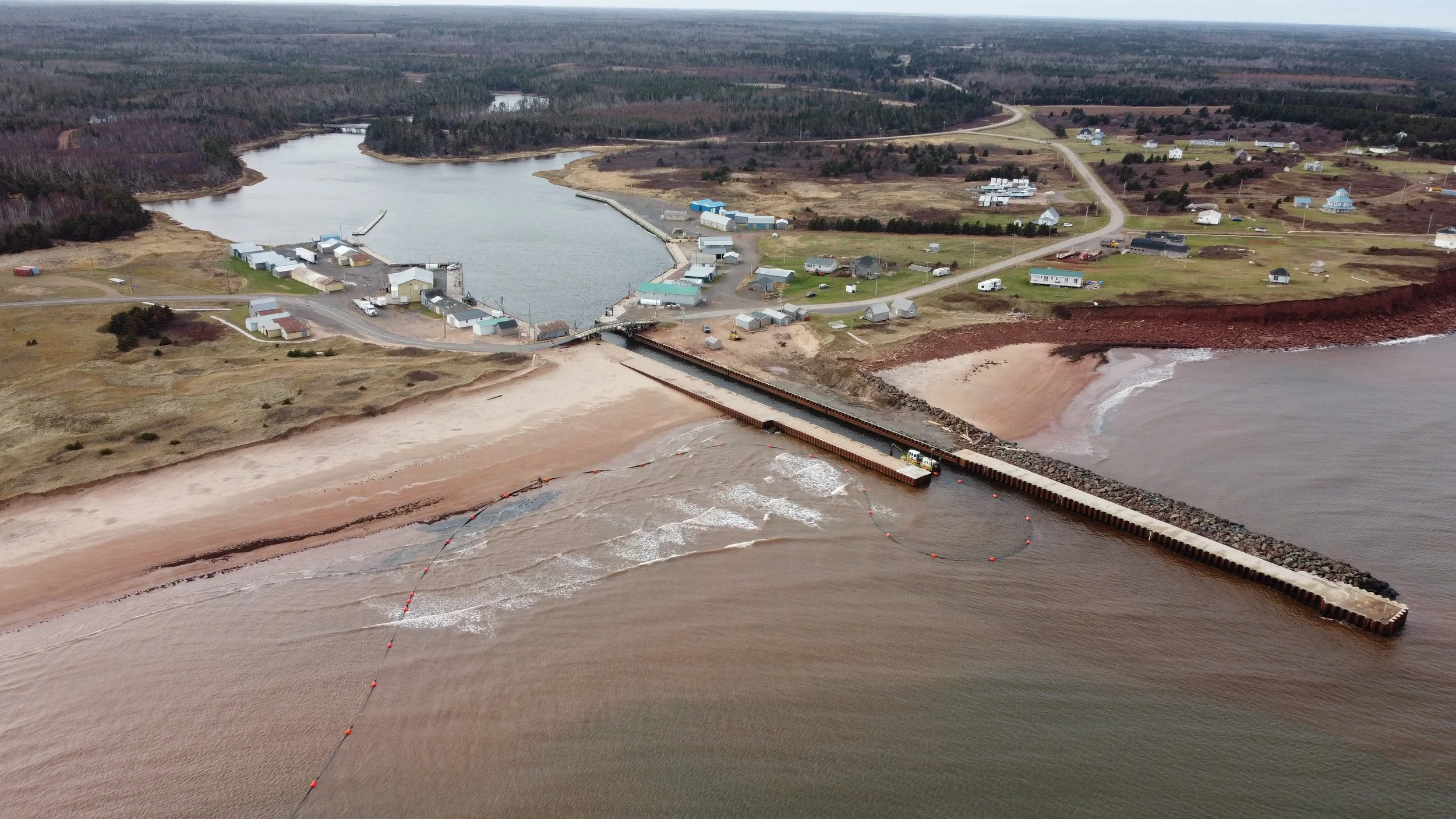
Naufrage harbour is located in Kings County, PE. This project included the demolition and re-construction of the existing breakwater structure that protects the run from the harbour out to the Gulf of St. Lawrence. The project was completed for DFO Small Craft Harbours through Public Services and Procurement Canada (PSPC). PSPC hired Harbourside on behalf of SCH to complete the structural design work. The existing breakwater was a timber piled structure, a concrete deck and armour stone below and at the end. The new structure is a steel sheet pile wall with a concrete deck and armour stone behind and at the end of the new breakwater.
Responsibilities of Key Personnel
Greg MacDonald, Project lead and main point of contact for client, concept development lead, coordination of all sub-consultants, design engineer & senior review of the design, drawings, specification, cost estimates and scheduling.
Ron Keefe, - Site inspection, development of options analysis, lead design engineer of the new wharf structure, development of cost estimates, specifications and the project schedule and site inspector as required throughout construction.
Scope of Services & Deliverables
For this project, Harbourside was engaged as the prime consultant to complete the design of a new breakwater to replace the existing breakwater structure. Our scope of services for this project included pre-design services including a site investigation and assessment of the existing conditions. In addition, we coordinated an as-built topographic and bathymetry survey of the existing structures and harbour bottom to aide in the development of accurate drawings of the existing and new structure. Next, we completed concept designs by developing options analysis of the potential breakwater configurations and structural options including: a rubble mound breakwater, an SSP wall structure with armour stone and a rubble mound breakwater and a new timber piled structure and armour stone. In the next phase of the project, we completed the detailed design of the recommended option (a SSP wall structure with armour stone and a rubble mound breakwater) which included the development and review of the construction documents (drawings, specifications, schedule and capital cost estimates) at 50%, 99% and 100% completion of the tender package. Part of the detailed design phase included reviewing the constructability of the proposed structure with our geotechnical sub-consultant.
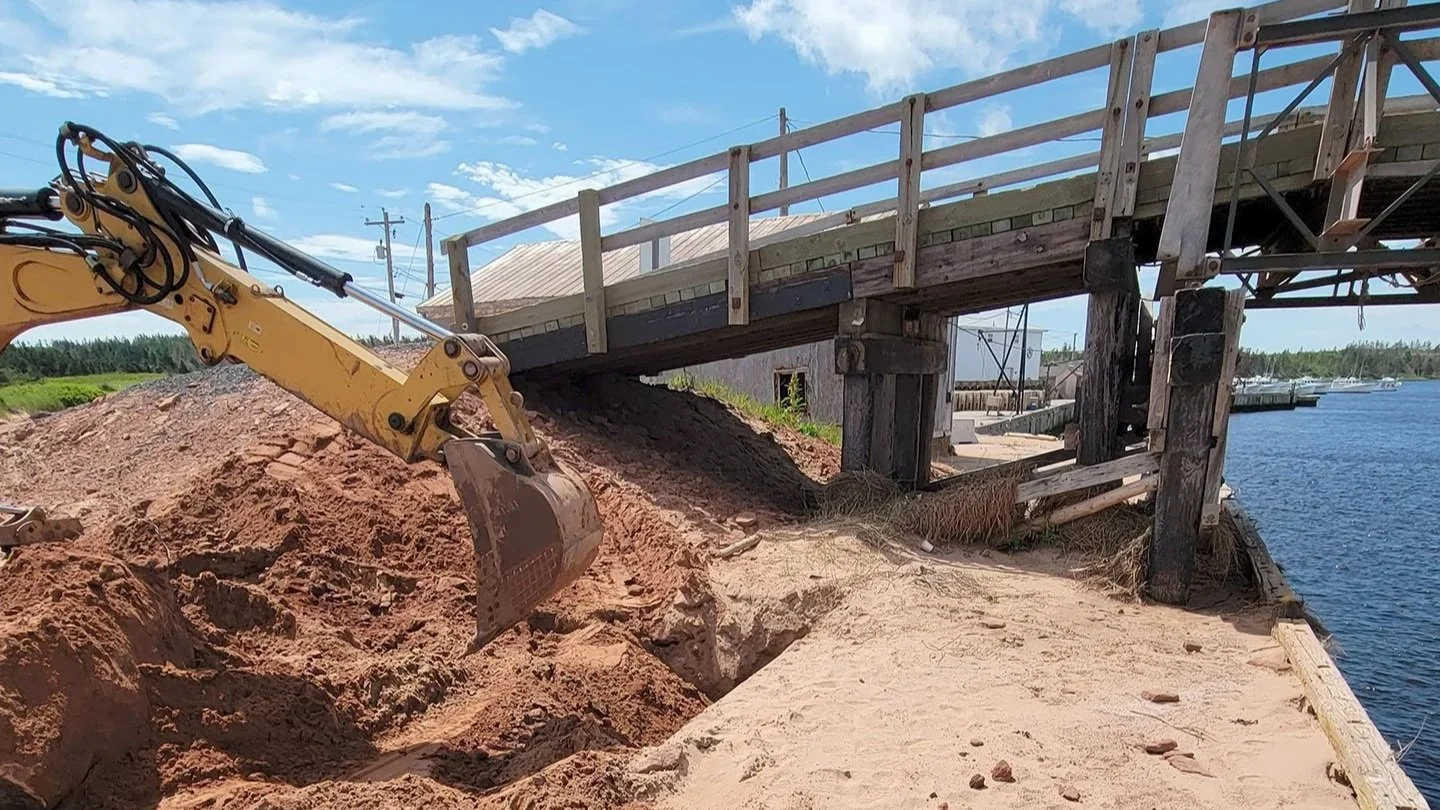
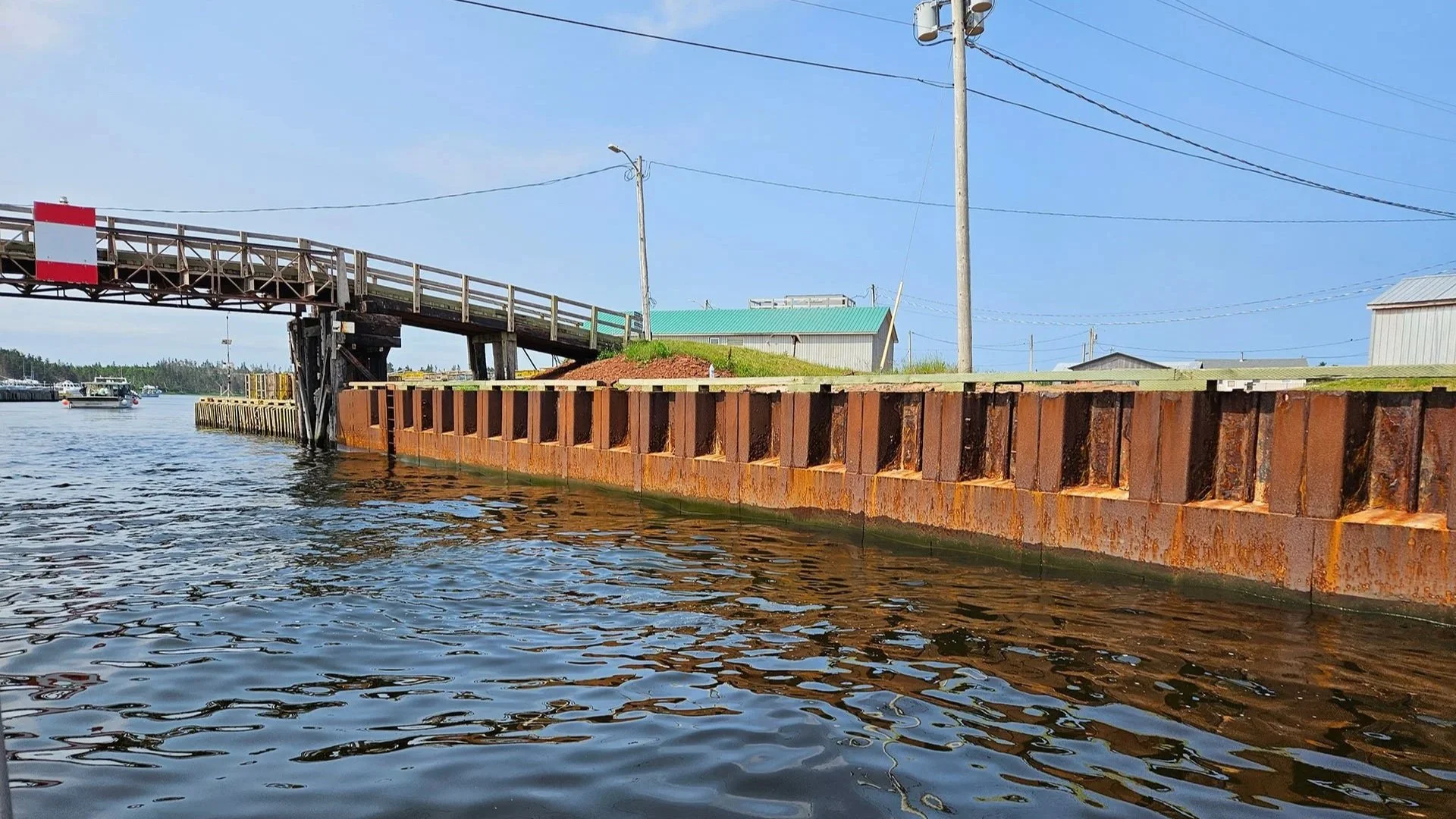
We reviewed construction phasing options to demolish the existing structure which included timber piles and some steel sheet pile sections at the start and end of the breakwater. The proposed installation methodology, the potential risks of the project, the project schedule and the capital cost estimates were all reviewed and discussed with the Project Manager, Intermediate Engineering, Geotechnical sub-consultant and the client prior to finalizing the tender documents. Throughout the tender and construction, Harbourside provided support for the PSPC project manager by completing periodic site inspections, answering technical queries, developing addendums and developing innovative solutions to help the contractor deal with unique site conditions.
Project Challenges & Constraints
This project had several challenges from a design and construction perspective. One of the main constraints was that the harbour authority and end users required the new structure with a vertical face on the run side of the breakwater. This was required because of safety concerns of the harbour users upon entry on return into the harbour. This eliminated some potential options. Another challenge was tying the new sheet pile into the existing structure. Where the two structures tied in, there were existing steel sheet piles and due to heavy corrosion at the mudline, these sheets could not be removed. Due to this, a small step in the new sheet pile wall was required to avoid an interference with the new and existing sheet piles. Some project risks cannot be mitigated; however, quickly and decisively dealing with issues as they arise onsite during construction is important to maintaining the overall project schedule and budget.