
Location: Virginia, USA
Client: Hampton Roads Connection Partners Joint-Venture (HRCP-JV)
Timeframe: 2020-2027 (Est.)
Key Personnel: Ron Keefe
Project Description
The I-64 Corridor is one of the most congested in all of Virginia. Traffic can experience backups up to 6 miles long (that’s 9.6km).
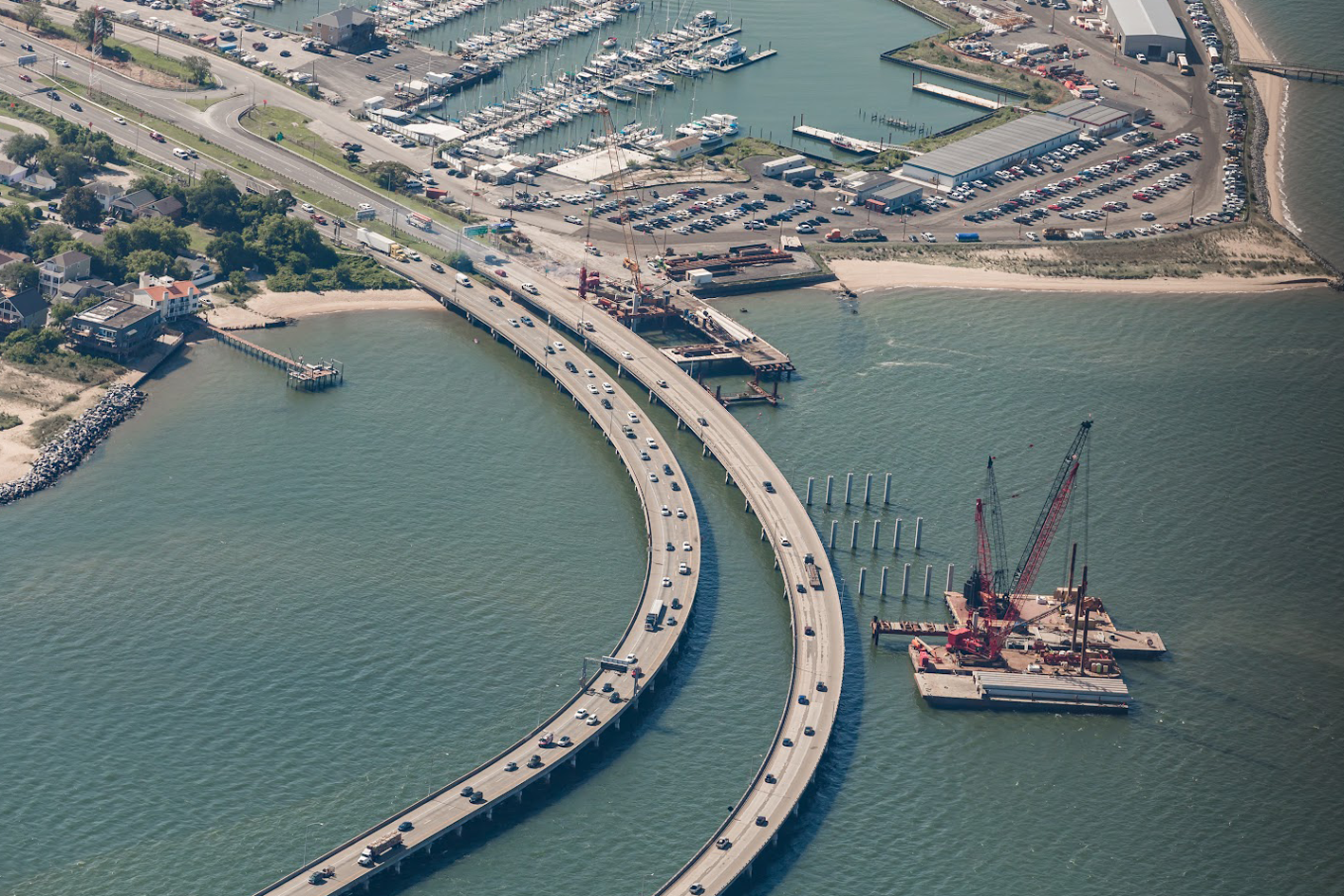
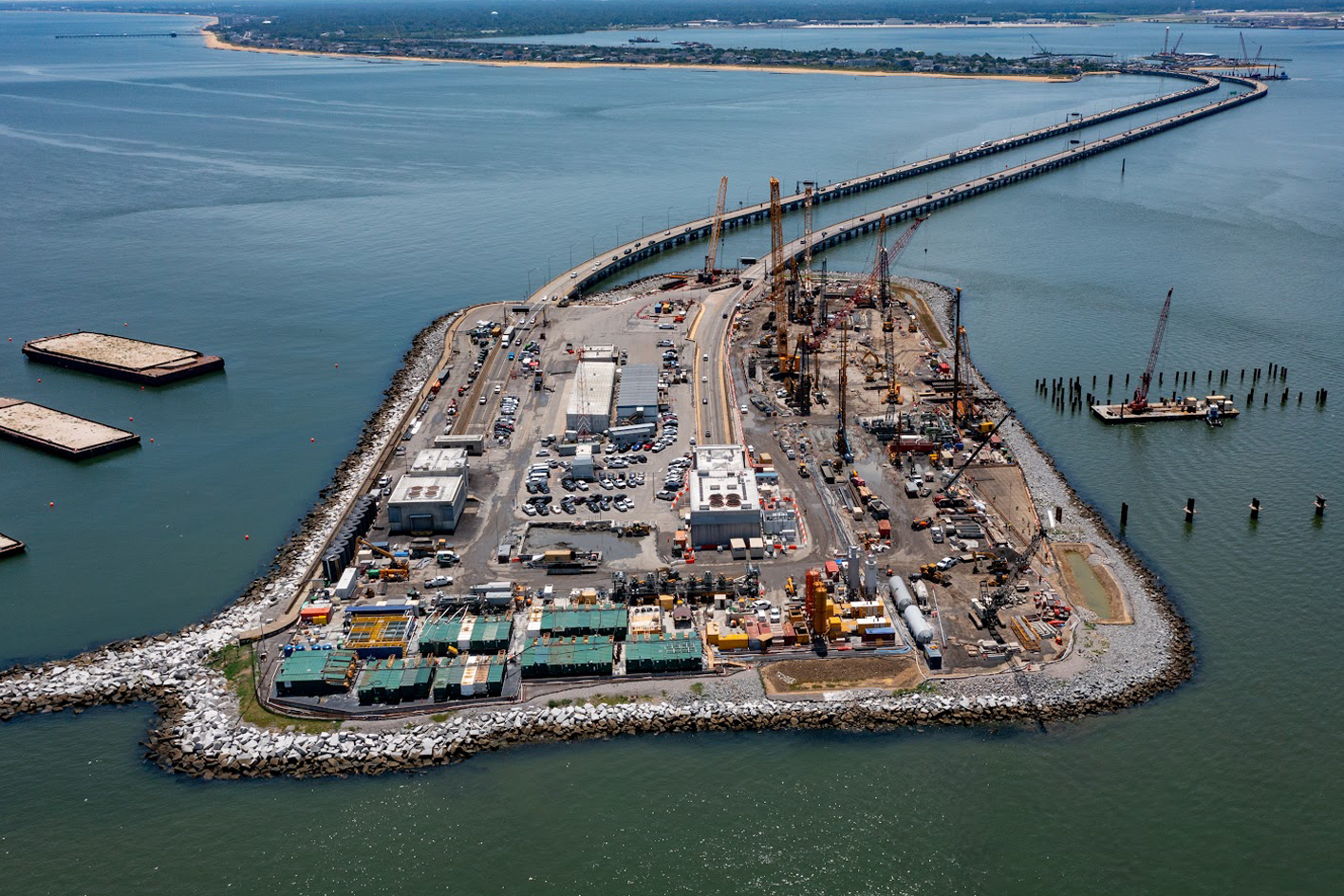
At time of writing, the Hampton Roads Bridge-Tunnel Expansion is the largest highway construction project in Virginia’s history. This transformative undertaking will widen the current four-lane segments along nearly ten miles of the I-64 corridor in Norfolk and Hampton, with new twin tunnels across the harbor. The expansion will increase capacity, ease major congestion, and enhance travel time reliability. Including the construction contract and owner’s costs, the project’s total budget is over $3.9 billion, making it one of the largest infrastructure projects in the country.
Harbourside is providing construction engineering services for the construction of the temporary management of traffic structures (MOT Structures), and permanent bridge structures as they tie into the South Island. Harbourside has also been involved with the means and methods analysis for all options, which has covered schedule effects, constructability, and risk. In this role, we presented the options analysis and ultimately assisted the client in selection of the most efficient option. Naturally, our assistance took into account the overall schedule and client’s appetite for risk.
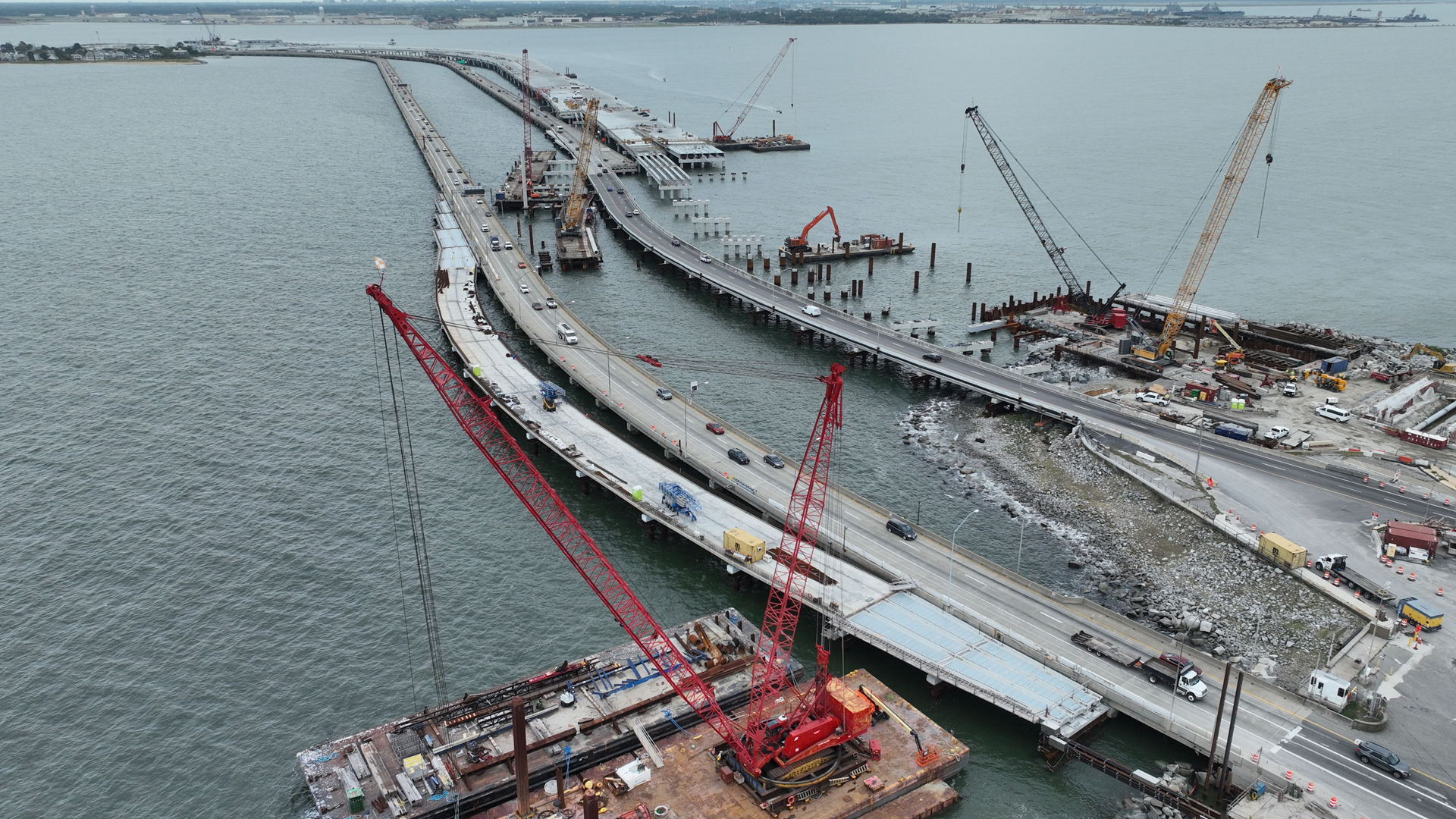
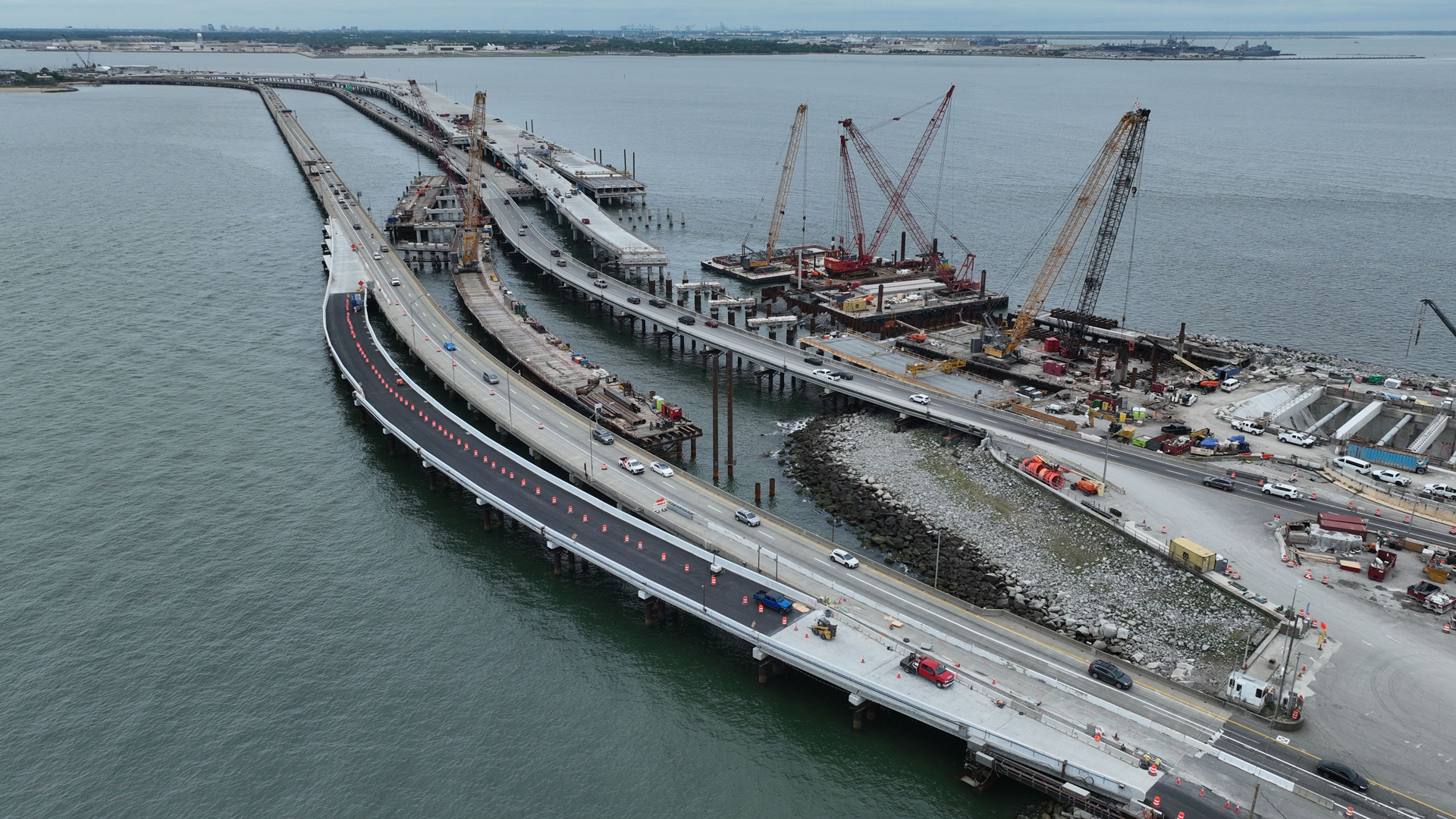
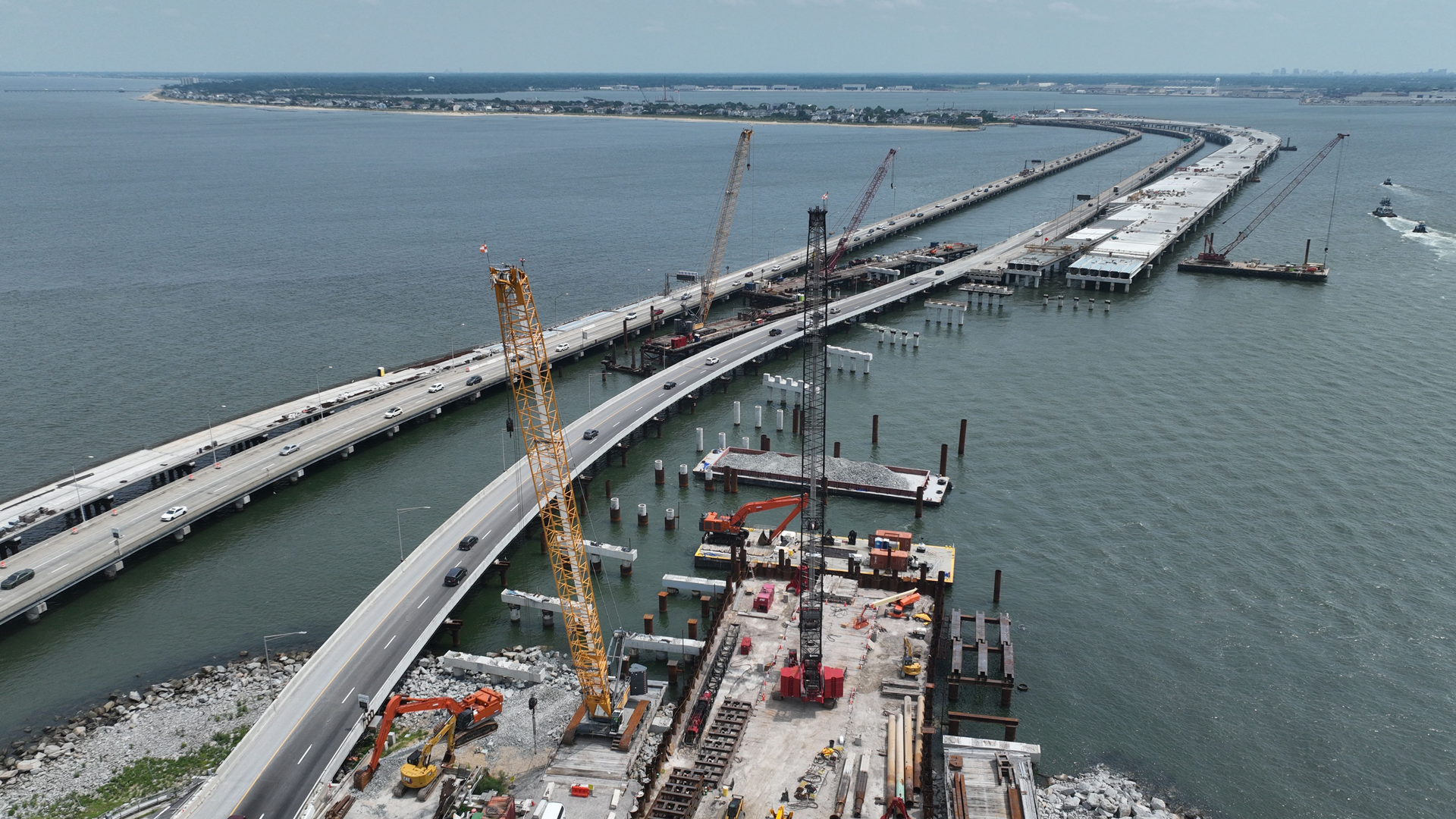
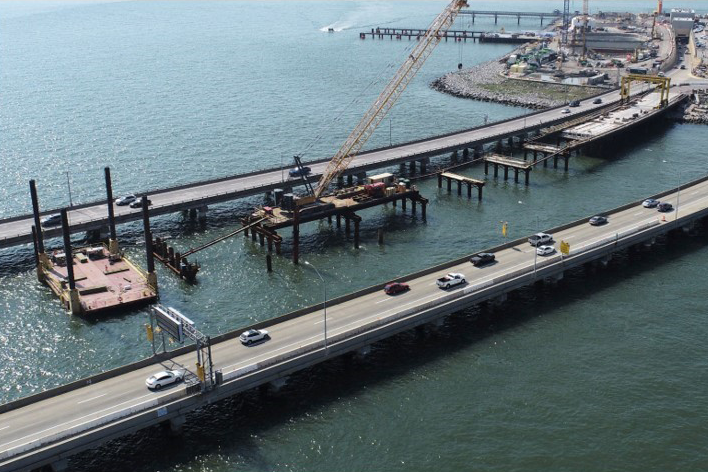
This particular part of the project has significant challenges with constructing MOT and permanent structures which are confined by two existing bridges for a distance of over 1500’ with no easy access by barge. Complicated formwork, and design for temporary retaining walls also fell under Harbourside’s scope.
Harbourside’s Role
Harbourside was responsible for the design of a 120’ long, 2-span jump bridge system to build the sub-structure for the Eastbound MOT. Our system was supported by the very substructure we were building! The jump bridge was used by a 300-tonne crawler crane (weighing in at 670,000 lbs with nothing on the hook!), and an assortment of other equipment to build the substructure.
Harbourside was also responsible for the design of a track system for a mobile, rubber-tired gantry crane was used to erect the MOT superstructure. The track system flanked the new bridge but was supported by an oversized sub-structure (widened piers) for the MOT. Harbourside had to coordinate carefully with the engineers of record to ensure the redesign of the sub-structure suited the construction and in-service demands.
Harbourside Engineering was also responsible for the detailed design of a 1500’ construction trestle to support the same 300-tonne crawler crane (actually two at the same time), placed adjacent to the Eastbound MOT where the MOT ties into the existing bridge. This design required careful attention at the transition from jump bridge to trestle.
Harbourside continues to support Hampton Roads Connection Partners Joint Venture as means and methods are continuously evolving to suit the construction schedule and resources.
Services Provided
• Design for working platforms for storage / lifting equipment.
• Review of and design for impact on adjacent existing structures.
• Temporary Retaining Walls
• Complicated Concrete Formwork
• Temporary trestle to support a self-propelled rubber-tired gantry crane.
• Design of a steel jump bridge for a 300 mT crawler crane supported by the existing MOT foundations.
• Design of a new construction trestle adjacent to the new bridges’ alignment founded on steel friction piles.
Social Impact
By fall 2025, nearly 2400 workers were on site daily, working on the expansion. At this time, traffic was moved to the eight-lane bridge. The project is on track to be completed by 2027, helping to mitigate traffic congestion on one of the busiest connector corridors in the region. A massive undertaking by any metric, this project is a huge investment in modern infrastructure for Virginians. This will allow for future growth throughout the region and improve travel times for commuters.