

LOCATION: North River, Queen’s County, PEI
CLIENT: PEI Department of Fisheries, Rural Development and Tourism
TIMEFRAME: 2024-2025
KEY PERSONNEL: Ron Keefe
Project Description
The North River Slipway Reconstruction project, delivered for the Department of Fisheries, Rural Development and Tourism of Prince Edward Island, addressed extensive damage sustained during Hurricane Fiona. The original slipway, located immediately adjacent to the North River Bridge, consisted of precast concrete log segments linked by steel bar loops and set atop an infilled area with limited protection from wave action.
These logs extended only marginally above the waterline, which was not ideal for serving users during all tidal cycles. During Hurricane Fiona, heavy wave action destroyed the upland approach and rendered the slipway unusable.
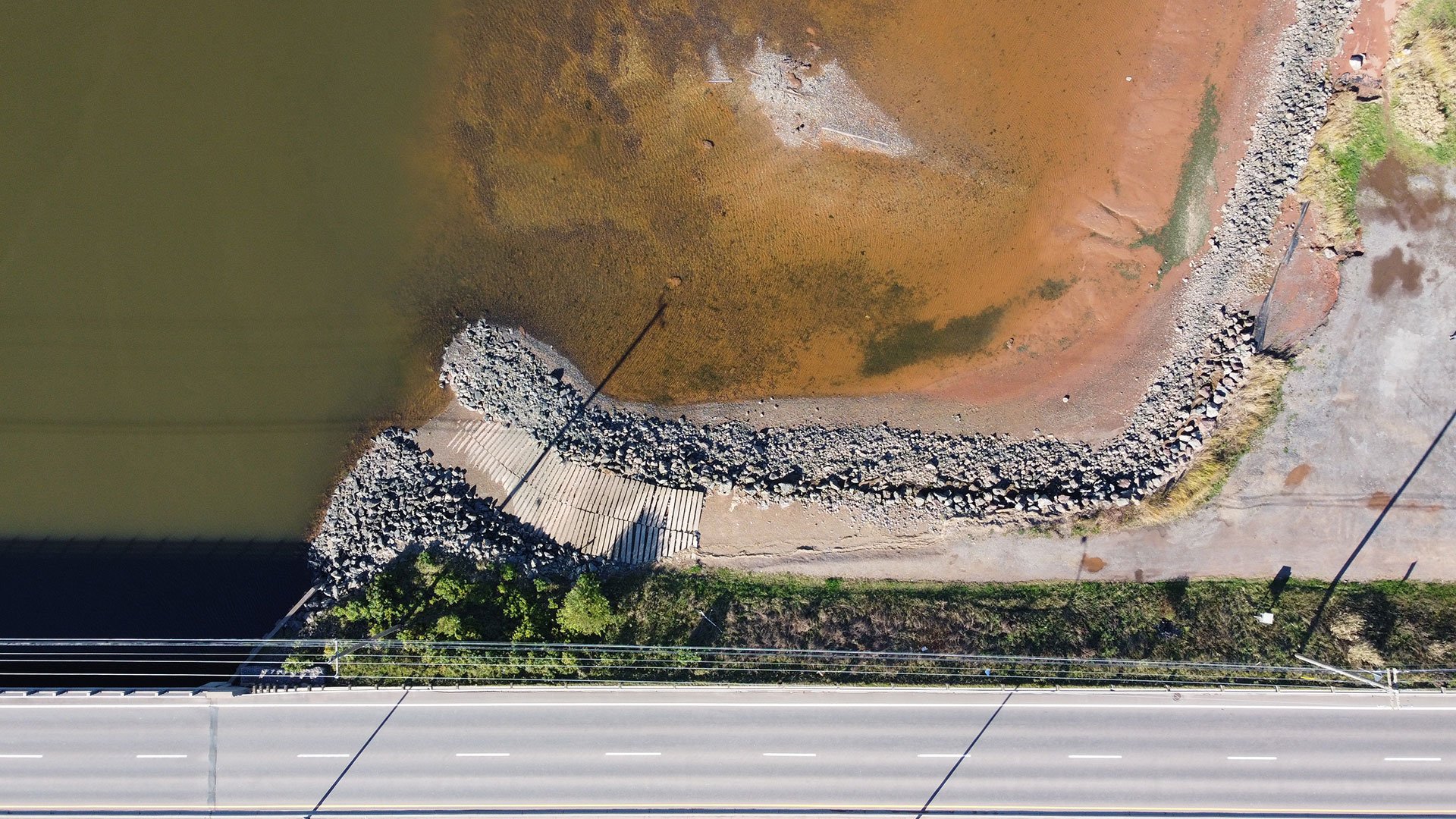
The slipway had served a wide range of users until that point, including local shellfish harvesters, recreational boaters and kayakers, the North River Fire Department, search and rescue and fisheries officers. Harbourside Engineering was engaged to develop and evaluate replacement options capable of meeting these diverse operational needs. Alternative marine engineering options included repairing the existing log structure, constructing a new precast concrete slipway on a refined alignment, and relocating the slipway approximately 15-meters down the shoreline.
After stakeholder consultation and technical assessment, the preferred option was a widened, straighter precast panel slipway built largely on the existing alignment. The new slipway extends deeper into the river to accommodate the large tidal range—approximately 3 m during spring tides—and reaches elevation −1.0 m chart datum. Because the river current is strong near the channel under the bridge, the slipway could not extend further into the water, requiring landward repositioning of the slipway’s upper extent. Harbourside also engineered shoreline protection features on the exposed northern side to shield the new structure from future storm events.
The work required careful coordination with the Department of Transportation to ensure that excavation limits and construction activities did not adversely affect the adjacent bridge embankment. Construction occurred during winter months and required substantial removal of existing material to achieve the required grades. The final structure provides a durable, storm‑resilient facility supporting a wide range of community users.
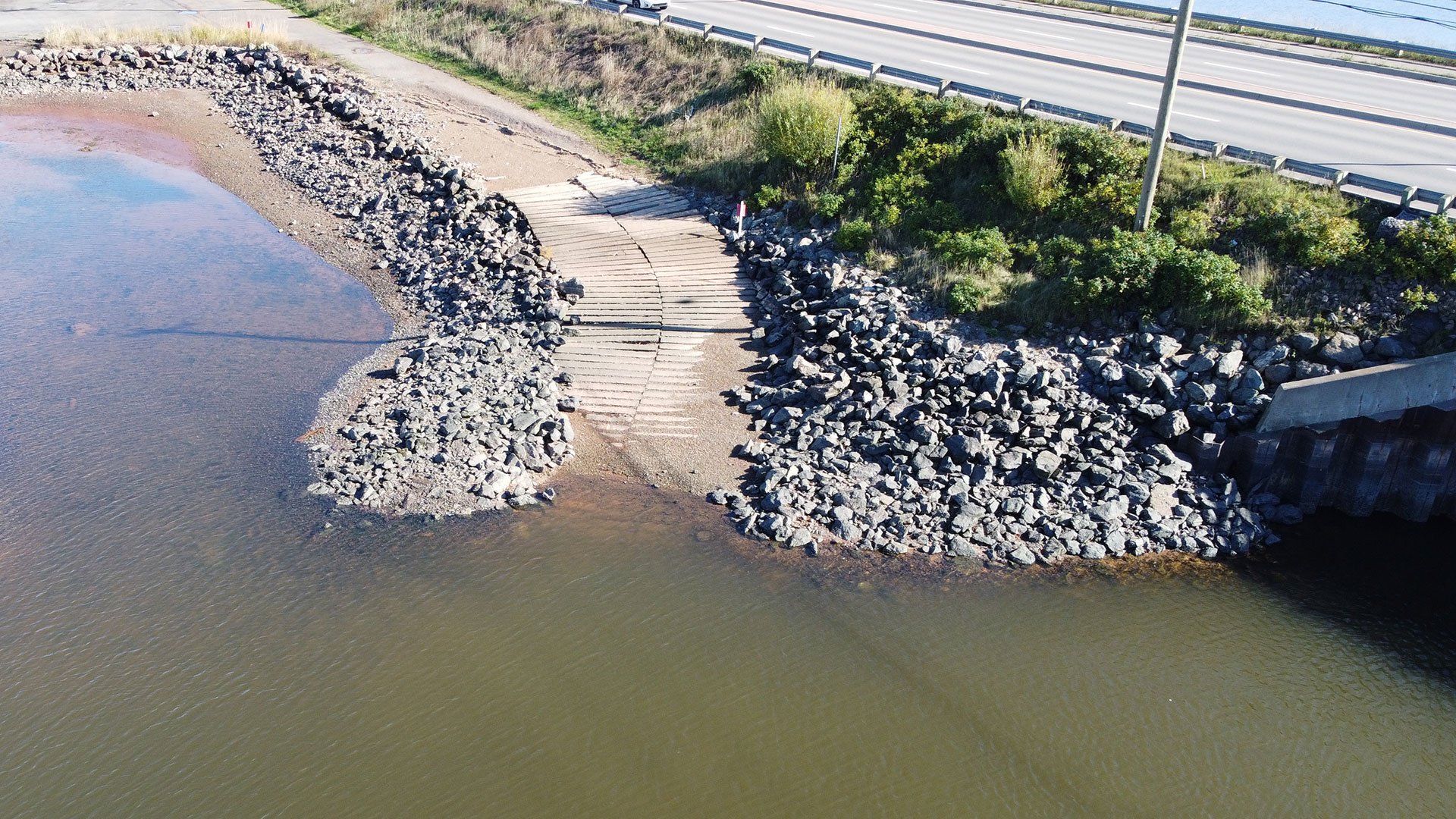
The original slipway, as observed during the initial site investigation. Image taken via drone.
Harbourside’s Role
As prime engineering consultant, Harbourside completed the detailed structural and civil design for the new slipway, developed and assessed multiple alignment and configuration options, and prepared all tender‑ready drawings, specifications, and cost estimates. Our team coordinated with the Department of Transportation to confirm acceptable excavation limits near the bridge and designed a new shoreline protection system to improve long‑term resilience. Harbourside Engineering also consulted with multiple user groups to better understand their needs and operations. With this information in mind, we designed accordingly to provide a slipway that was suitable for everyone. During construction, Harbourside provided contract administration services, including site reviews, participation in progress meetings, RFI and change‑order review, and final deficiency inspections.
Unique Challenges
Key challenges included balancing the needs of multiple stakeholders while working within a limited budget. Large tidal rang also imposed significant constraints which required a substantially longer slipway to remain functional at all tide levels. The project also required careful attention to avoid disturbing the adjacent bridge embankment and to manage strong river currents that limited how far the slipway could extend into the water. Winter construction and significant excavation added further complexity to the project.
Social Impact
The reconstructed slipway restores an essential piece of community infrastructure used daily by commercial shellfish harvesters, recreational boaters, emergency responders, and fisheries officers. By providing a safer, more resilient launching facility, the project strengthens local marine activity and supports public safety and the regional economy.